
 Instagram
英文
| 中文
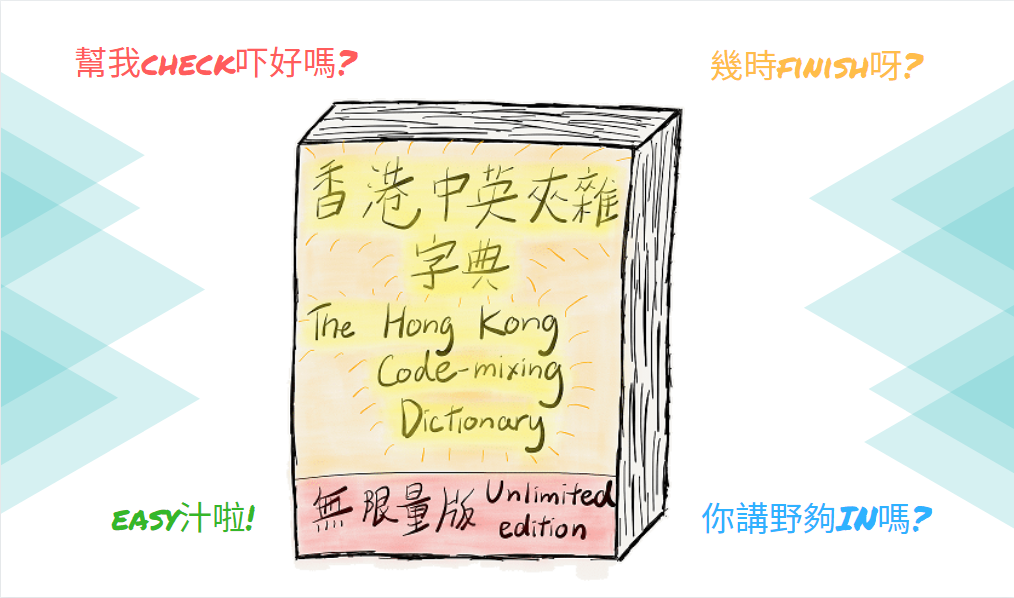
19 results found
定義: A code-mixing term that overseas educated Hong Kongers use to refer to '靚', which describes something as beautiful or good-looking.
用法: E.g. No, but seriously it’s really lang, you are the one who said hou ce right?
參考: http://www.lingref.com/isb/4/039ISB4.PDF
定義: A code-mixing term used by Hong Kong speech therapists to refer to getting two languages mixed up in children's expressions, which is said to improve over time as they grow up.
用法: E.g.「語言撈亂(Code-mixing)」是正常過程:小朋友將唔同語言撈埋一齊講(例如:「I want 食飯」),不代表他們語言混淆,而是大腦在運用現有詞彙表達自己,隨著年齡增長會自然分開。("Code-mixing" is a normal process: When children mix different languages together such as saying "I want *sik faan*" (eat rice), it does not mean they are confused. Instead, their brains are simply utilizing the vocabulary they are possessing to express themselves, which will naturally resolve as they grow older.)
同義詞: 語言撈亂
參考: https://www.threads.com/share/_p4j9KY3l
定義: Often complemented with '鳩吹' meaning talking nonsense or bullsh*t, this is a code-mixing term used by native Hong Kongers to refer to the type of language exchange where people are simply talking and chatting but not quite making much effort in learning language at all.
用法: E.g. 去唔去language exchange呀?B:你係指鳩吹exchange?(A: Want to go to language exchange? B: You mean nonsense / bullsh*t exchange?)
同義詞: 交流
參考: https://lihkg.com/thread/1240271/page/2
定義: A code-mixing term used by overseas educated Hong Kongers to refer to being able to gain experience of something by being in a particular environment rather than having physical contact with something. However, it is not to be confused with public exposure.
用法: E.g. 學習語言要夠exposure。(Learning a language needs enough exposure.) E.g. 做開大行去細行一定唔慣,exposure 又細啲,資源又小啲。(It must be hard getting used to working in a small company if you came from a large company. There is less exposure and resources are also less.)
同義詞: 接觸
參考: https://lihkg.com/thread/2363704/page/1
定義: A code-mixing filler term used by westernised Hong Kongers when they don't really find the other person's topic is all that interesting in a conversation.
用法: E.g. A: 我平時鍾意寫app,去語言交流免費教人廣東話。B: 哦,interesting, interesting... (A: I like writing apps and going to language exchange to volunteer teaching people Cantonese regularly. B: Oh, interesting, interesting...) E.g. 我見外國人成日都用interesting 黎答人,仲要面無表情,會唔會係根本interesting 係外國一直都只係解: 哦⋯⋯. (I often see foreigners use 'interesting' as a response in a conversation, but without facial expression. Could it be that 'interesting' merely means like 'oh....' from a foreigner's perspective?)
同義詞: 很有趣, 哦
參考: https://lihkg.com/thread/1047783/page/1
定義: It is a slang used in casual, humorous contexts to describe the buttocks, often linked to the roundness of the full moon during the Mid-Autumn Festival.
用法: My first skateboard experience is i fell on my august 15th as soon as I stood on the board!
同義詞: 八月十五
參考: https://www.cantonese.sheik.co.uk/dictionary/words/32249/
定義: A code-mixing term that Hong Kongers like to use to refer to the language channel that one is speaking in.
用法: E.g. 做咩成日轉channel講英文呀?你喺到扮ABC呀? E.g. 咪住。等我轉一轉channel講返中文先。
定義: (idiom) Derived from '雞同鴨講', this is a Kongish code-mixing phrase used by native Hong Kongers to describe two people who are unable to understand each other due to a difference of language or values. In other words, the conversation just seems to go round and round with each person talking over each other.
用法: E.g. I think we will never understand each other because we work in different departments. What a chicken and duck talk!
同義詞: 雞同鴨講
參考: https://zolimacitymag.com/pop-cantonese-word-of-the-month-雞同鴨講-chicken-duck-talk/
定義: This is a Cantonese slang that refers to a situation where a player has a clear opportunity to score a point. The slangs origin comes from a volleyball game where a sports announcer said "Cha SIU" instead of the word "chance". Although the word came from a volleyball game initially, it's more widely used in badminton games.
用法: That was a total set up for a smash, total Cha SIU!
同義詞: 食叉燒
定義: (verb) Derived from the game "final fantasy", this is a Cantonese slang to refer to someone who fantasizes too much.
用法: Be realistic! Don't FF too much la.
同義詞: Fantasize
參考: https://www.cantoneseclass101.com/blog/2019/07/23/cantonese-text-slang/