
 Instagram
英文
| 中文
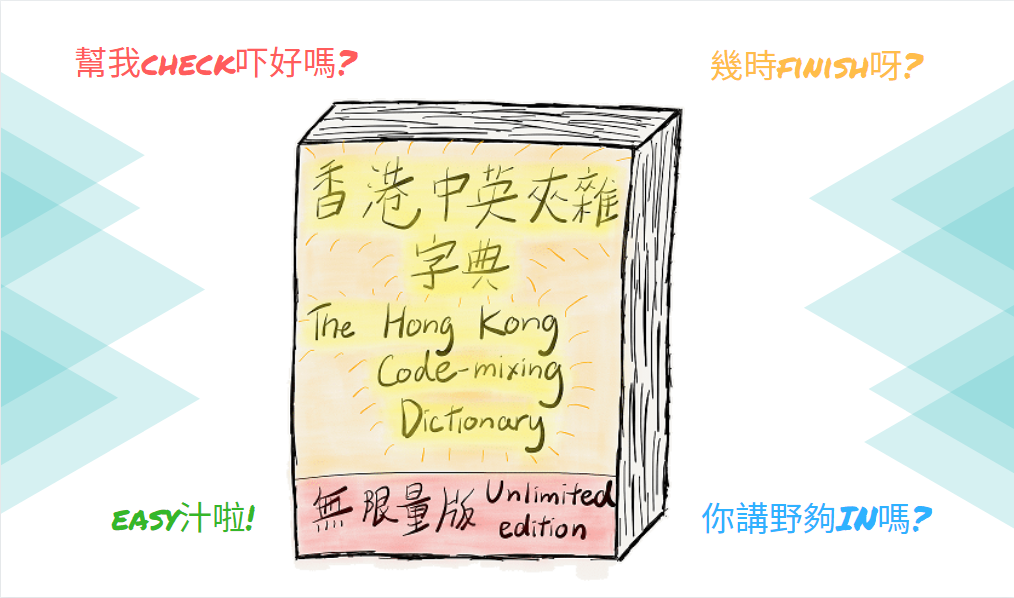
10 個隨機詞彙,共 946 個結果
定義: A tag-switching phrase often used by Native Hong Kongers for clarifying on matters. However, it can sometimes be overused by Fake ABC's to strike a western impression on others.
用法: E.g. 份project未搞掂呀。I mean,我岩岩做完要check吓先。 E.g. 港女:你應該食少D野。I mean,你應該減吓肥至岩。 E.g. 香港人:你講咩話?偽ABC:I mean,well... I mean,我覺得你身材唔係好fit囉I mean。
參考: https://www.academia.edu/8666953/Common_usage_of_code-mixing_among_trilingual_Hong_Kongers
定義: Often seen as redundant, this is a code-mixing phrase used by working class Hong Kongers when they really want to show politeness towards the email's receiver in a request.
用法: E.g. Please kindly find the attached document.
同義詞: 請
定義: A code-mixing term that is often used by people in the IT sector to refer to a computer bug (漏洞).
用法: E.g. 唔係掛?今次個program有咁多bug?!
同義詞: 漏洞
定義: Known as Kongish, this is code-mixing term used by native Hong Kongers to refer to money and lots of different things.
用法: E.g. Blow water. (吹水 - to chat casually or brag about something) E.g. Measure water. (磅水 - to give money) E.g. Return water. (回水 - to return money) E.g. Clear water. (通水 - to give secret info like a test) E.g. Draw water. (抽水 - to get profit or benefit for free) E.g. One lump of water. (一舊水 - one hundred dollars) E.g. What water? (乜水 - who the heck are you?)
定義: A code-mixing phrase that a Jayden Mami loves to use to refer to a more casual way of learning something rather than the formal way of acquiring skills and information.
用法: E.g. Jayden呀,有時間就去pick up English啦。你唔用既話會好快forget架。(Jayden, go and pick up English when you have time. If you don't use it, you will forget it.)
同義詞: 學識; 練習
參考: https://hk.amazingtalker.com/questions/8407
定義: A shortened code-mixing term that Hong Kongers use to refer to the word 'register', such as registering for an account in an app to become a member.
用法: E.g. 快D download個app再reg個account成為會員啦!
同義詞: 申請
定義: 1. (noun) A word used instead of the Cantonese equivalent to denote the meaning of casual wear. 2. (verb) A word used to tell another person to be casual, informal, and relaxed. 3. (adj.) A word used to describe something as being informal, such as an event.
用法: E.g. 同事: 聽日著casual得喇,知道嗎? E.g. 今日食飯casual D得喇。(隨便) E.g. 我聽日要去個casual既聚會。(非正式)
同義詞: 隨便; 非正式
參考: https://www.esquirehk.com/mens-talk/simon-shen-hong-kong-english-chinese
定義: A code-mixing term used to refer to holding something physically (揸), but with the meaning of waiting for the return of something as well.
用法: E.g. Hold住個電話先。 E.g. 個project兒家hold住左,因為要同個客傾返好先。
同義詞: 揸
參考: https://repository.lib.cuhk.edu.hk/tc/item/cuhk-321644
定義: A code-mixing phrase used by upper class Hong Kong girls who are really honest about how much money they spend.
用法: E.g. 我需要啲咩啫,嚟嚟去去我咪又係食叉燒飯、意粉,I don't really spend money.(我根本唔花錢)對我嚟講無關係,我真係無嘢。(E.g. What do I really need? Wherever I go I just eat barbeque pork rice, pasta, I don't really spend money.(I don't spend money at all) Money doesn't matter to me, I really don't care.)
同義詞: 我根本唔花錢
定義: A code-mixing term used by working class Hong Kongers to refer to socialising with people when they are too tired of '應酬' in Cantonese where one is eating, drinking or entertaining clients for the sake of establishing business relations.
用法: E.g. 曾經諗過改 逼自己扮social 但最後發現乜都唔理做番自己最舒服 唔洗夾硬逼自己扮哂野去應酬人 (I once thought about forcing myself to pretend to be social, but in the end I found that I didn't need to care about anything but being myself was the most comfortable. I didn't have to force myself to pretend to be social to entertain people.)
同義詞: 應酬
參考: https://lihkg.com/thread/310048/page/3