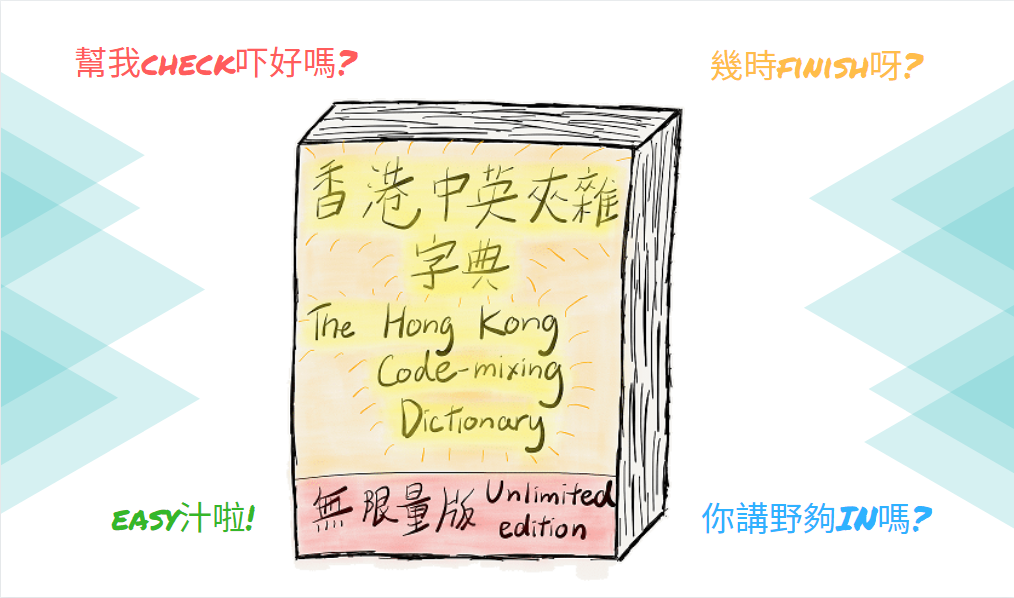
Definition: Originated from the Cantonese movie 'Night King' starring Dayo Wong (黃子華), this is a code-mixing term used by native Hong Kongers to refer to the Lai King MTR station.
Usage: E.g. A: 今晚去唔去荔景?B: 好呀。不過荔景幾時變左Night King?!(A: Want to go to Lai King tonight? B: Sure. But when did Lai King become Night King?!)
Synonym: 夜王, 荔景
Reference: https://www.hk01.com/電影/60330286/夜王-葵芳一角爆紅-港鐵葵芳站改名franchesca-仲有隱藏廣播
Definition: A code-mixing term used by native Hong Kongers as a more abstract way of referring to a person's relationship status without a partner than emphasizing the physical body as ‘單身’ denotes in Cantonese. Even though 'dog' is seen as a derogatory term, the phrase is often treated as a common everyday joke than it is really mocking someone seriously.
Usage: E.g. 無論班女仔fd幾大班,三個又好,五個又好,十幾個又好,都係得我係single dog (No matter how big my group of female friends is, three or five or ten, I am the single dog.)
Synonym: 單身狗
Reference: https://amp.lihkg.com/thread/708381/page/1
Definition: Known as Kongish, this is a code-mixing term used by native Hong Kongers to refer to slacking off at work.
Usage: E.g. Don't be such a snake king all the time! Get some work done!
Synonym: 蛇王
Definition: Originated from '頂' (ding2) meaning 'to withstand', this is a code-mixing term used by native Hong Kongers to refer to something that is impossible to withstand. Also spelled as 'un頂able'.
Usage: E.g. 依家d學生極之有問題 完全0尊 d old seadfood 八公八婆完全undingable (Nowadays the students are extremely problematic and completely show no respect. The old snobby seniors, nosy bastards and bitches are completely impossible to withstand.)
Synonym: 頂唔順
Reference: https://www.threads.com/share/_l91vOaRS/
Definition: A code-mixing term used by Hong Kong speech therapists to refer to getting two languages mixed up in children's expressions, which is said to improve over time as they grow up.
Usage: E.g.「語言撈亂(Code-mixing)」是正常過程:小朋友將唔同語言撈埋一齊講(例如:「I want 食飯」),不代表他們語言混淆,而是大腦在運用現有詞彙表達自己,隨著年齡增長會自然分開。("Code-mixing" is a normal process: When children mix different languages together such as saying "I want *sik faan*" (eat rice), it does not mean they are confused. Instead, their brains are simply utilizing the vocabulary they are possessing to express themselves, which will naturally resolve as they grow older.)
Synonym: 語言撈亂
Reference: https://www.threads.com/share/_p4j9KY3l
Definition: A code-mixing term used by upper class Hong Kongers to refer to the stage of a meal where the main dish is served. As to why ‘course’ is more often used than ‘dish’ compared to the Cantonese phrase ‘主菜‘, it may be to do with the upper class etiquette that the stage of a meal is more important than the dish itself.
Usage: E.g. 食semi-buffet質素好過buffet, 起碼個main course係入得落口 (The quality of eating semi-buffet is higher than buffet, at least the main course is decent.)
Synonym: 主菜
Reference: https://lihkg.com/thread/3120803/page/3
Definition: A code-mixing term used by native Hong Kongers to describe being receptive to new ideas but not to the point of so expansive by opening boundaries.
Usage: E.g. 我係一個open-minded既人,但係唔代表我內裡open。(I am an open-minded person, but that doesn't mean I am open on the inside. XD)
Synonym: 思想開放; 開明
Reference: https://hinative.com/questions/26265836
Definition: A code-mixing term that working class Hong Kongers like to use to describe something that is not yet done or paid.
Usage: E.g. 依家仲有咩case係outstanding?
Synonym: 未解決

 Instagram