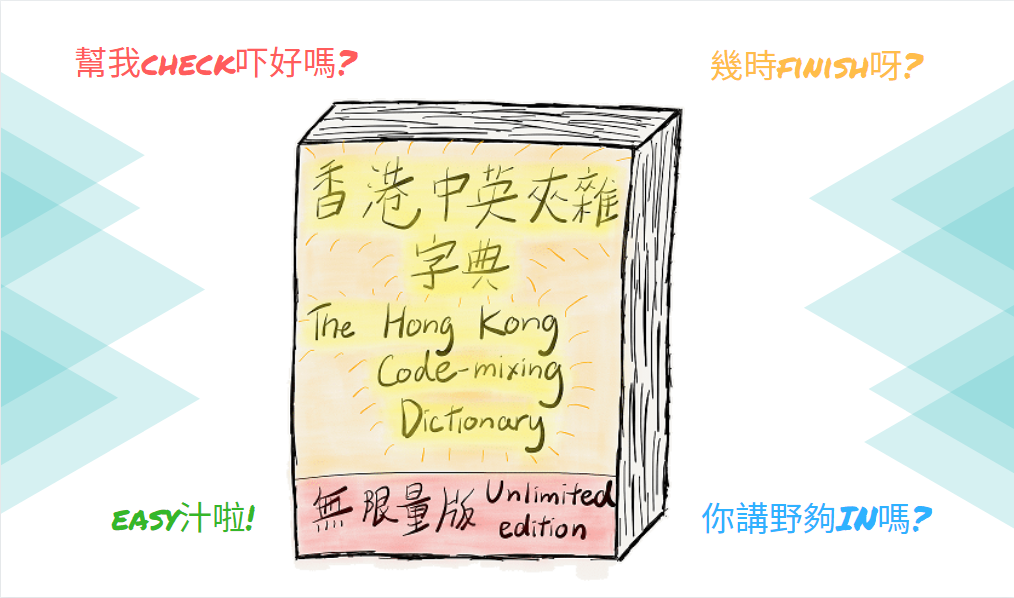
Definition: A code-mixing term used by native Hong Kongers to refer to withdrawing from a relationship gradually. However, it can also be comparable to 'ghosting' if the withdrawal is sudden enough.
Usage: E.g. 可以點樣fade out想追我既人 (How can I fade out from someone who is chasing me?)
Synonym: 淡出
Reference: https://lihkg.com/thread/2975441/page/1
Definition: A code-mixing term used by native Hong Kongers to refer to taking pleasure from doing something. Sometimes, it can also be used intransitively as a verb to describe a state of mind where one is having a good time.
Usage: E.g. 每次暴雨或者打風,唔知點解我都好enjoy。(Whenever there is heavy rain or typhoon, I don't know why I really enjoy it.)
Synonym: 享受
Reference: https://lihkg.com/thread/3973322/page/1
Definition: A code-mixing phrase used by Hong Kong local students to encourage others to keep studying hard and make progress every day.
Usage: E.g. My Chinese classmates often tell me to 'Good good study, day day up'. It's so catchy!
Synonym: 好好學習,天天向上
Reference: https://dw-media.tkww.hk/epaper/tkp/20091103/A25_Screen.pdf
Definition: A code-mixing term that Hong Kong restaurants love to use especially during public holiday to refer to the additional fee added to a bill because it sounds more classy than '服務費' and less explicit than '加一' or '加二' in Cantonese, which mean +10% and +20% respectively.
Usage: E.g. A: 吓?食個下午茶都要加二? B: 今日係新年假期,所以有service charge。(A: What? There's +20% service charge even for an afternoon tea? B: Today is Chinese New Year holiday so there is service charge.)
E.g. 到底邊個發明加一服務費?(Who on earth invented +10% service charge?)
Synonym: 加一, 加二, 服務費
Reference: https://lihkg.com/thread/2268003/page/4
Definition: A code-mixing term that native Hong Kongers often use to refer to the act of becoming a part of a group or party, but sometimes without the responsibility or effort of attending or participating.
Usage: E.g. A: 今晚join唔join個after party? B: Join左喇,不過懶得去囉。(Will you join the after party tonight? B: I have joined already, but I'm too lazy to go.)
Synonym: 加入,參加
Reference: https://www.threads.com/@harpymill/post/DT0laZJDJNR/video-唔好意思係咪太遲join個party尋秦記-豎琴-harp-香港
Definition: A code-mixing term used by working class Hong Kongers to refer to an employee with an experienced background, but not necessarily the adequate skills to do the job.
Usage: E.g. 我條team條senior,叫佢廢物都覺得侮辱左廢物依個詞語,日日例牌遲到都算,咩都唔識 (E.g. As for my team's senior, I think it would even be an insult to the word 'rubbish' if I were to call him rubbish. Not only is he late every day, but also he does not know anything.)
Synonym: 資深; 高級
Reference: https://lihkg.com/thread/2386628/page/1
Definition: A code-mixing term that refers to a person's microphone being muted while in a meeting.
Usage: E.g. 同事:喂,我聽唔到呀,你mute左呀。快D搵人叫佢unmute返啦。
Definition: A code-mixing term that native Hong Kongers sometimes use to refer to the Swedish furniture store.
Usage: E.g. A: 咁你係叫 IKEA 定宜家家居?B: 姨媽傢俬 C: 宜家傢俬 (A: So do you say IKEA or Yee-Ga Furniture? B: Auntie Furniture. C: Yee-Ga Furniture)
Synonym: 宜家傢俬
Reference: https://www.threads.com/share/FAxWjYYL-/

 Instagram