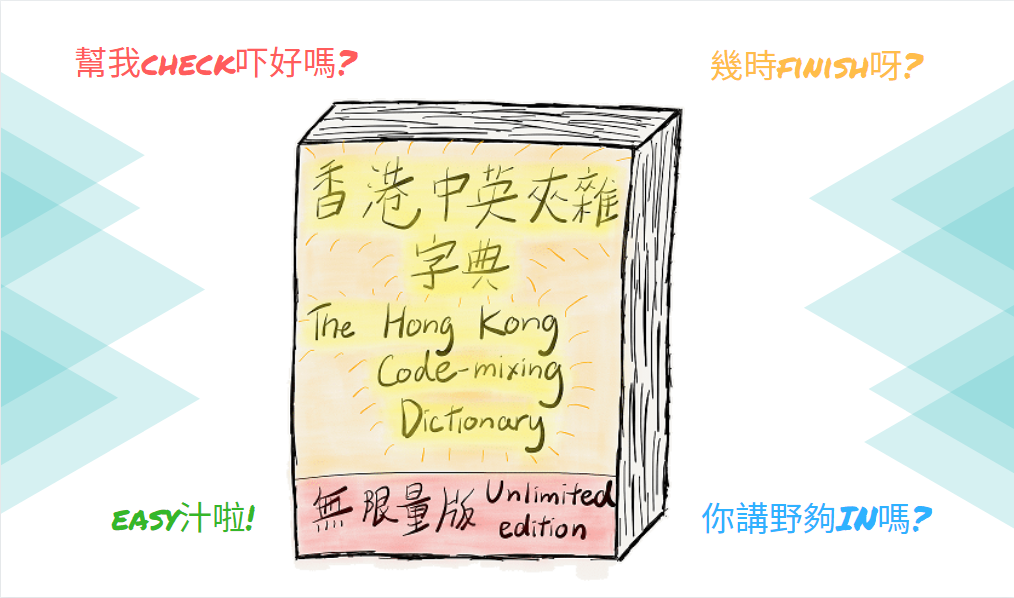
Definition: A code-mixing phrase used by overseas educated Hong Kongers to sound polite and confident when bringing forth a standpoint so that the other person is less likely to challenge them.
Usage: E.g. 我講既野係咪好有理據先? 如果你仲想challenge我,be my guest! (Don't you think I really have a rationale in what I'm saying? If you still want to challenge me, be my guest!)
Synonym: 請便、你隨意、當然可以,別客氣
Definition: A code-mixing term used by Hong Kong teachers to make it clear and explicit that their students are essentially dead if they hand in their homework or assignment late, as the Cantonese equivalent phrase ‘截止日期’ does not denote the meaning of death at all.
Usage: E.g. 聽日就係deadline, 唔交功課就零雞蛋!(Tomorrow is deadline. If you do not hand in your homework, you will get a zero mark!)
Synonym: 截止日期
Reference: https://lihkg.com/thread/809281/page/1
Definition: With 'I' for introvert and 'E' for extrovert, this is a code-mixing term used by overseas educated Hong Kongers who are very knowledgeable or obsessed about the MIBT (Myerrs Briggs type indicator) or the 16 personalities test.
Usage: E.g. A: 你係I人定E人?B: 我唔係好知,有可能係雙面E人。(A: Are you an introvert or extrovert? B: I don't know. Maybe I am a two-faced extrovert.)
Synonym: Introvert, extrovert
Reference: https://resources.ctgoodjobs.hk/article/37733/mbti-i人同e人區別-10種情境解析-一秒分辨你係-i人定e人
Definition: A code-mixing phrase used by overseas educated Hong Kongers who want to express their sincere gratitude towards someone without saying 'thank you' repetitively.
Usage: E.g. 唔該哂你幫我手呀。I really appreciate it.
Synonym: 我好感激你
Reference: https://www.youtube.com/watch?v=JKwHZnk1ZNs
Definition: A code-mixing term used by overseas educated Hong Kongers to describe someone or something that is of upper class quality such as the way a person talks and does things, regardless of occupation or how much money one makes.
Usage: E.g. posh 嘅 British accent 好 posh 大部份都唔 posh (A posh British accent is really posh, but most are not posh.)
Synonym: 高雅
Reference: https://www.threads.com/share/BAa2pmfXlQ/
Definition: A code-mixing phrase that overseas educated Hong Kongers use when they want to express their well-educated guess or opinion on a subject matter without sounding so formal and bookish.
Usage: E.g. 呢個program我覺得in general係幾學到野。(I think I can really learn from this program in general.)
Synonym: 一般而言
Reference: https://lihkg.com/thread/3990504/page/1
Definition: (vulgar) A code-mixing phrase used by overseas educated Hong Kongers to describe something that is very annoying and frustrating to the point where it causes constant trouble or inconvenience, even though it has nothing to do with someone's butt.
Usage: E.g. 之後見到Front desk同事,話果間房客係”pain in the arse”, 佢不停投訴,個個都想佢快L d check out,但佢不停extend (Then I saw my front desk colleague, saying that the guest was ”pain in the arse”. He kept complaining, and everyone wanted him to check out quickly, but he kept extending his stay at the room.)
Synonym: 令人討厭或痛苦的
Reference: https://www.threads.com/share/BBRT_1BUrh/
Definition: A code-mixing term used by overseas educated Hong Kongers to refer to a place to stay or live, which they believe should be provided by companies or schools that are accommodating.
Usage: E.g. 個人建議你有得報學校accommodation就報左先。(Personally, I suggest that you should apply for the school's accommodation if you can.)
E.g. 你公司幫你搵咩accommodation?(What accommodation does your company provide?)
Synonym: 住宿
Reference: https://lihkg.com/thread/3555364/page/32

 Instagram